
Intent
At Biggin C of E Primary, we follow the National Curriculum and use the White Rose Maths approach to help every child develop confidence and success in mathematics.
Maths is taught in small, manageable steps to build secure understanding and strong foundations. We encourage children to explain their thinking, explore different methods and apply their learning to solve problems. We are currently working on using stem sentences in order to structure our talk in maths.
A strong focus is placed on fluency with key number facts, alongside developing reasoning and problem-solving skills. Through discussion, challenge and real-life contexts, children become confident, resilient and independent mathematicians who are well prepared for the future.
Implementation
Planning and teaching is directly linked to the National Curriculum Programmes of Study 2014 in Years 1-6, and the Statutory framework for the early years foundation stage. Fluency, concepts, reasoning and problem solving are taught daily during mathematics lessons which revisit and build on prior learning, make connections and use real life contexts where appropriate.
In order to ensure whole school consistency and progression, at Biggin we teach maths in Key Stage 1 and 2 by following the nationally recognised White Rose Scheme. The White Rose Scheme of work is a cumulative curriculum, so once a topic is covered, it will be met many times again in different contexts. White Rose teaches mathematical concepts in blocks, that are progressive, through small steps.
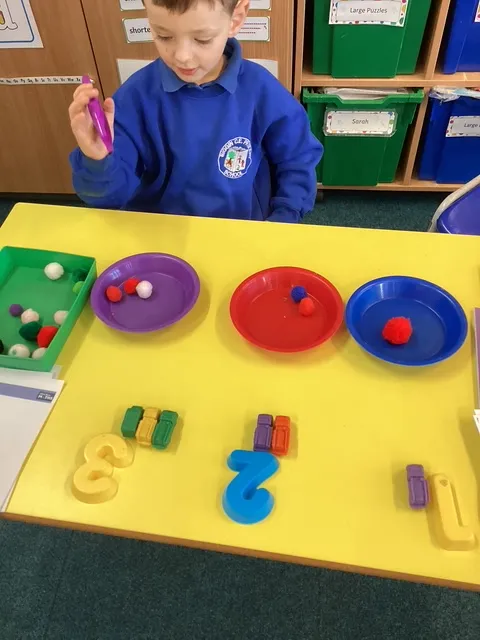
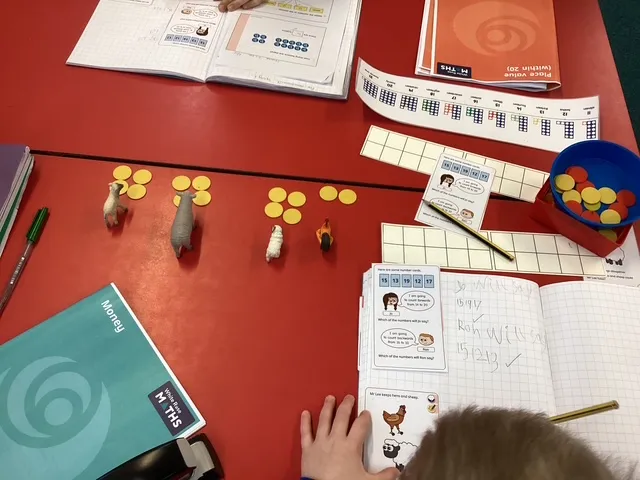
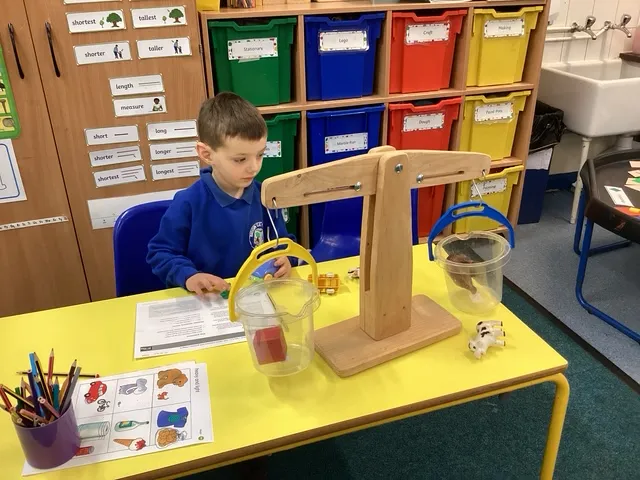
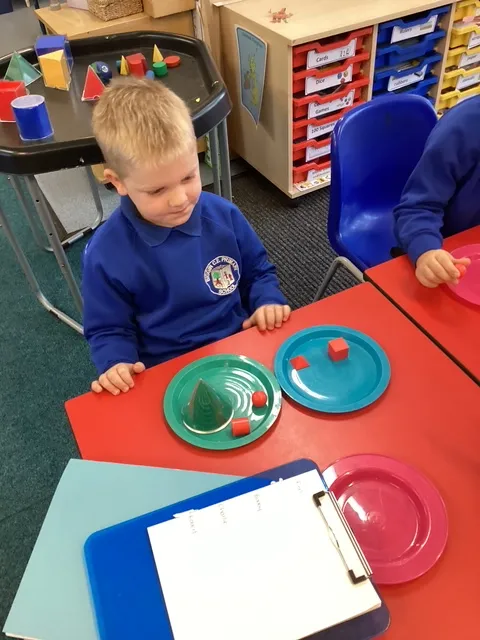
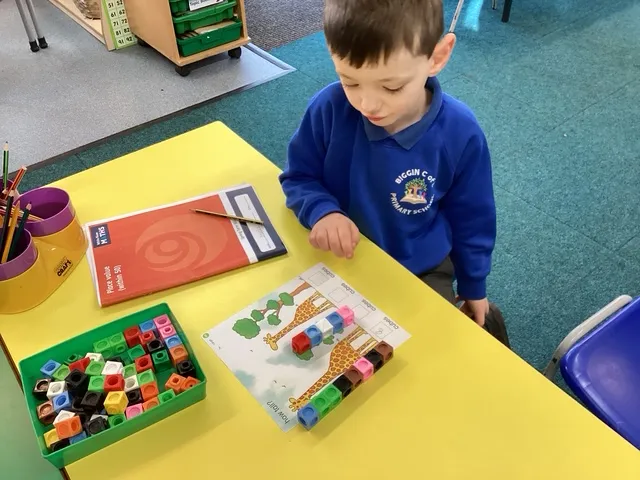
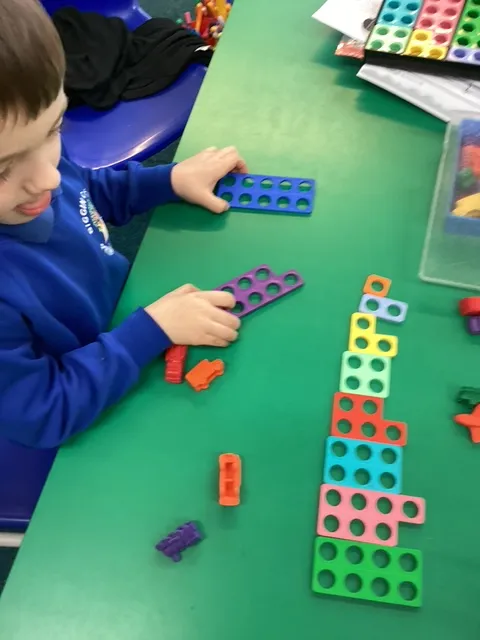
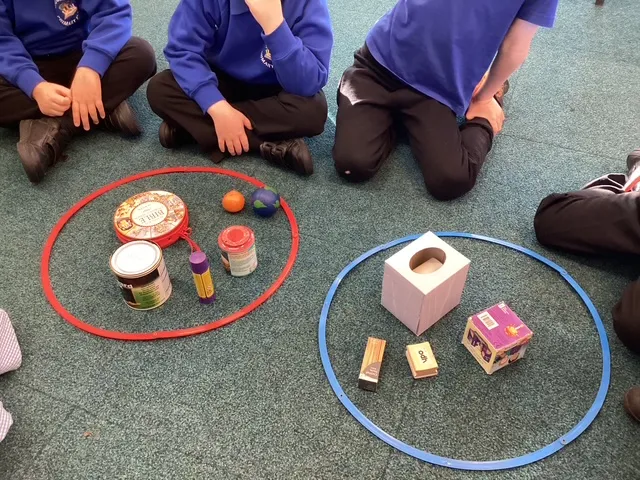
Maths lessons are taught for approximately one hour each day. They are planned to provide plenty of opportunities to build fluency, reasoning and problem solving elements into our curriculum. Our teaching with White Rose uses an adaptive and inclusive approach to enable all children to have access to problem-solving. This could be through the use of maths resources, extra support, reading questions to name a few strategies. Our children build on their understanding of concepts and procedures using a CPA approach. When introducing a new concept, children have the opportunity to use concrete objects and manipulatives, alongside pictorial representations to help their conceptual understanding and develop ways of recording before moving onto abstract methods. All calculations are in line with the calculations policy.
We recognise that no one scheme fulfils all the requirements for pupils’ success so we supplement White Rose with other resources and work in a flexible manner to ensure that deep understand is secure.
Before the start of a new maths topic, a pre-assessment is completed for teaching staff to identify gaps in learning. This informs teacher planning of objectives to ensure pupils are taught with the appropriate support and challenged accordingly.
We ensure there are opportunities to revisit and revise prior learning in every lesson, this can look like morning tasks or at the beginning of each maths lesson using the White Rose Flashback 4 task.
Being a small school allows teachers lots of opporunities to live mark and support children in the moment with any mis-conceptions.
There are opportunities outside of the main lesson for children to practise their fluency facts. Year 3-6 consolidate their fluency facts with Times Table Rockstars and Year 1-2 with NumBots.
Impact
By implementing the maths intent, our children should leave primary school being confident and proficient in:
- being fluent in the fundamentals of mathematics so that they have good understanding of concepts and the ability to recall and apply their knowledge rapidly and accurately
- reason mathematically and develop justifications using mathematical language
- solve problems by applying their knowledge and skills
- be efficient in mental and written procedures, fluent and accurate in maths
At the end of each term the children complete a PUMA assessment which informs teachers on any gaps that the children might have in their maths. This can then structured into our planning and focuses any additional tasks including morning tasks. Our data is entered into our school tracking system 'Boost'. This allows our maths lead to track children's attainment and progression across the school.
There are lots of fun maths resources available online for children. These can be accessed using the links below ⬇️


